 SHENDZO
Personal finance
How to make your first monthly budget
After rent and bills, one $3,000 paycheck leaves $1,300. Some of that is going toward a trip. How much is left for groceries, bus fare and a Friday night out?
Start with last month’s bank statement and this month’s calendar. The statement will tell you what you usually spend. The calendar will catch the bills that only come around once in a while, like a car registration due this month.
Say you take home $3,000 a month. Rent, utilities and the other bills due this month come to $1,700. You also want to put $300 toward a trip. If you set that aside on payday, you have $1,000 for everyday spending after the bills are paid.
One month’s take-home pay
- Rent and bills
- $1,700
- Savings
- $300
- Everyday spending
- $1,000
Keep one running total
In our iPhone app Daily Ledger, you can set a spending limit for the month. For this budget, enter $2,700. That includes the $1,700 in bills and the $1,000 for everyday purchases. The $300 for the trip is already set aside.
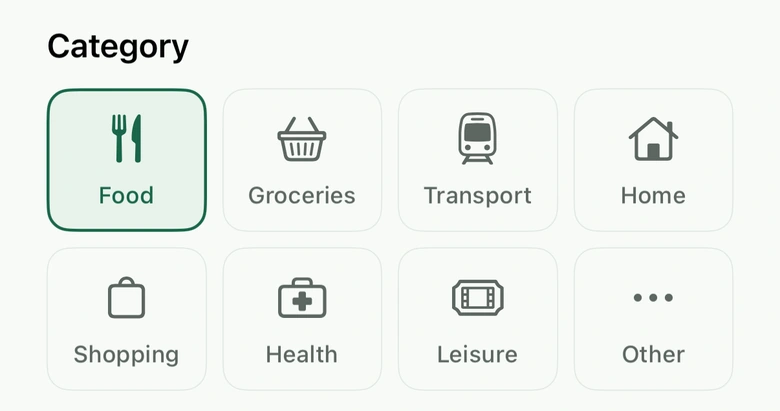
Record the bills as you pay them. If they’re all paid and you then spend $6 on coffee and $42 on groceries, you’ll see $952 left. Paying cash? Enter the purchase when you hand over the cash. Adding the ATM withdrawal as well would count the same money twice.
Can you go out on Friday?
Now suppose there are eight days until payday and your budget shows $180 left. Looking at last week’s receipts, you expect to spend about $90 on groceries and $30 getting to work over those eight days.
That leaves $60 for dinner and anything else that comes up. If your share of Friday’s bill will be about $40, you can say yes and still have $20 to spare.
Daily Ledger
You can set a monthly limit and record purchases for free. Entries are manual, and you can start without linking a bank account.